Intent versus Impact

Today's blog post is short and sweet--I'm in an all-day, four-day training that's keeping me busy. The training is intense, but wonderful!
As a bonus, on the first day, we explored the idea of identifying intent versus impact, and focusing on intent, rather than impact, when someone in the group says or does something hurtful.
I was immediately struck by how useful identifying intent versus impact is in all relationships. In particular, if you're a moving toward or moving away personality type, and you're in a relationship with a moving against personality type, intent versus impact is key.
Because moving toward and moving away personality types focus on how the other person is feeling, while moving away personality types are more focused on how they're feeling, it's common for moving toward and moving away types to feel hurt by entirely unintentional things moving against types say and do.
Being able to determine if something was intended, or impactful, can make all the difference. If you realize the other person said something that impacted you in an uncomfortable way, it's worth your while to ask if that was the other person's intent.
Acknowledging that the intent might not have been hurtful does not mean that you cannot or should not speak up about what happened. It does, however, give you space to feel calm, connected, and compassionate for the other person. And when you communicate your thoughts and feelings from a place of calmness, connection, and compassion, it's far more likely that your message will be received in a way that's helpful for your relationship.
Even if you aren't in the other person's circle of influence, and what you say doesn't influence them, it'll still be easier for you to be assertive, instead of being passive-aggressive, aggressive, or passive. You can be proud of the way you communicated your thoughts and feelings--which, of course, is all that's in your own circle of control.
Of course, a statement or action can be both intentional and impactful, in a hurtful way. When that's the case, you'll need to take appropriate action, whether that might be using skills that help you feel calmer, communicating assertively, or asking for help.
If the idea of identifying the difference between intent and impact feels overwhelming, or if you need support with skills for identifying and regulating your feelings or communicating assertively, I encourage you to consider seeking out a therapist who can help you do so. You deserve to thrive!
Like what you're reading?
Click here for a free weekly email every Friday,
scroll down to leave a comment or a rating,
or click on the three dots at the top of the page to share with a friend!
(If you're not getting your email, check your Promotions, Updates, Junk, Spam, etc. folders!)
If you click on the links in this post and make a purchase, I earn a small finder's fee on qualifying purchases as an Amazon Associate, at no cost to you.
This website is for educational purposes only. It is not intended to be a substitute
for or to replace working with a doctor, therapist, or any other care provider.
I assume no responsibility for errors, inaccuracies, omissions, or other
inconsistencies, and disclaim any liability to any party for any events,
including but not limited to loss, damage, or disruption, whether loss,
damage, or disruptions results from negligence, accident, or any other cause.
Your use of the information on this website is at your own risk.
1
Searing the Beef
Sear beef fillets on high heat for 2 minutes per side to form a golden crust. Let it cool before proceeding to keep the beef tender.
1
Searing the Beef
Sear beef fillets on high heat for 2 minutes per side to form a golden crust. Let it cool before proceeding to keep the beef tender.
1
Searing the Beef
Sear beef fillets on high heat for 2 minutes per side to form a golden crust. Let it cool before proceeding to keep the beef tender.
1
Searing the Beef
Sear beef fillets on high heat for 2 minutes per side to form a golden crust. Let it cool before proceeding to keep the beef tender.
Notes


1
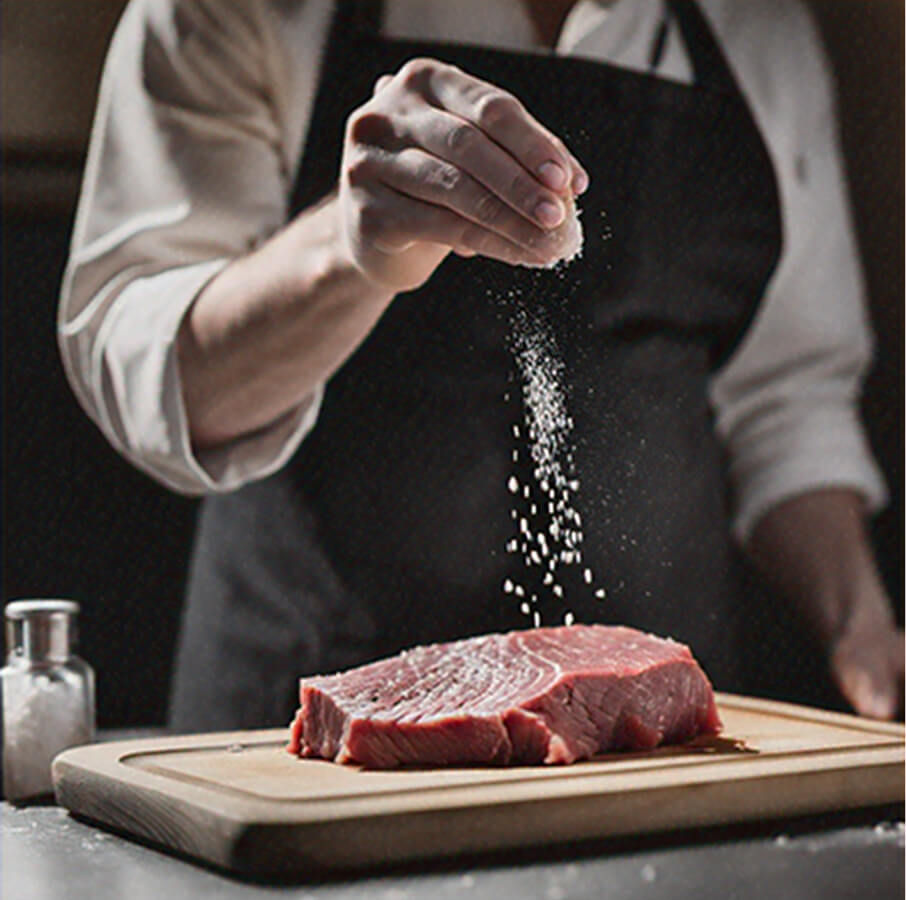
Season the good fresh beef fillets with salt and black pepper. Heat olive oil in a pan over high heat and sear the fillets for 2 minutes per side until it fully browned. Remove the beef from the pan and brush with a thin layer of mustard. Let it cool.
1
Season the good fresh beef fillets with salt and black pepper. Heat olive oil in a pan over high heat and sear the fillets for 2 minutes per side until it fully browned. Remove the beef from the pan and brush with a thin layer of mustard. Let it cool.
1
Season the good fresh beef fillets with salt and black pepper. Heat olive oil in a pan over high heat and sear the fillets for 2 minutes per side until it fully browned. Remove the beef from the pan and brush with a thin layer of mustard. Let it cool.
1
Season the good fresh beef fillets with salt and black pepper. Heat olive oil in a pan over high heat and sear the fillets for 2 minutes per side until it fully browned. Remove the beef from the pan and brush with a thin layer of mustard. Let it cool.
Instructions
Quality Fresh 2 beef fillets ( approximately 14 ounces each )
Quality Fresh 2 beef fillets ( approximately 14 ounces each )
Quality Fresh 2 beef fillets ( approximately 14 ounces each )
Beef Wellington
Beef Wellington
Fusion Wizard - Rooftop Eatery in Tokyo
Author Name
%20(1).jpg)
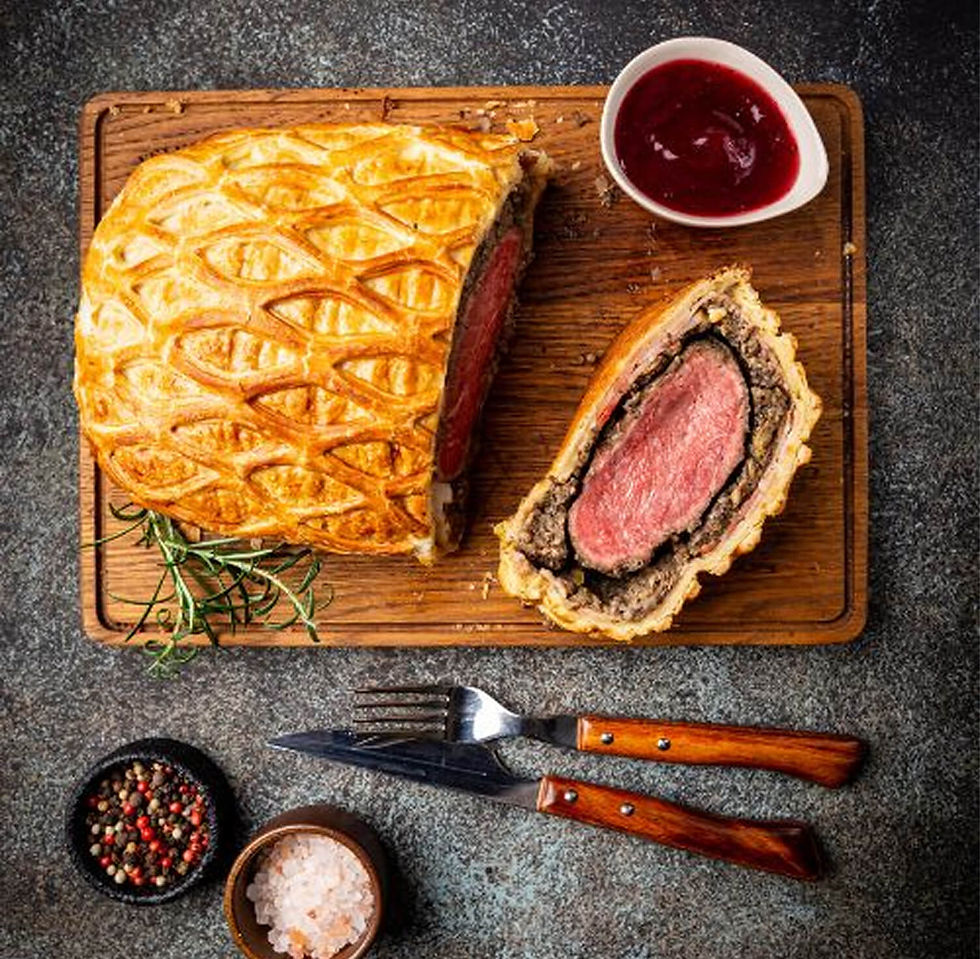
Beef Wellington is a luxurious dish featuring tender beef fillet coated with a flavorful mushroom duxelles and wrapped in a golden, flaky puff pastry. Perfect for special occasions, this recipe combines rich flavors and impressive presentation, making it the ultimate centerpiece for any celebration.
Servings :
4 Servings
Calories:
813 calories / Serve
Prep Time
30 mins
Prep Time
30 mins
Prep Time
30 mins
Prep Time
30 mins


Excellent post, this makes a ton of sense why making types of jokes with closer friends is comfy for me, and why friends with moving-against energy don’t impact me. Intent and consent go hand in hand!