Reacting vs. Responding in Narcissism Recovery

“Between stimulus and response is a space. In that space is our power to choose our response. In our response lies our growth and our freedom.” ~ Unknown
Today’s post explores reacting vs. responding in narcissism recovery. While this is a topic that I discuss with every client in narcissism recovery at some point in their journey, it's a topic that's applicable to anyone who’s experienced chronic childhood trauma, whether your parent was narcissistic or not.
Why does this become a topic in narcissism recovery? My clients in narcissism recovery all report they are used to reacting immediately, even when an immediate response isn’t necessary. They want to read every message as soon as they get a notification. They want to reply to every message they receive as soon as they read it, even if no response is necessary. They feel anxious if they pause before they answer someone. And so on.
So why do people with chronic childhood trauma react instead of respond? Here’s my working hypothesis: If you have a parent with narcissistic traits, your childhood was unsafe. In fact, the person who was supposed to keep you safe was the source of unsafety. And when you grow up in unsafety, you learn to react immediately. You just don’t have time to think things through when you’re a child in a situation with an adult who is unsafe!
Reacting instead of responding is a great way to survive, but it’s not how we thrive in narcissism recovery. As the quote above explores, it’s in pausing that we have the opportunity to decide what we think would be the best way to respond.
This is a well-known fact in the medical field. If you’ve ever done CPR training, you may remember the first step in responding to an emergency is check the scene for safety. This means to pause before walking into an emergency, and determine whether it’s safe for you to proceed.
The classic example is walking into a room where someone is lying on the floor unconscious. When a CPR class instructor asks, “What’s the first thing do you do?” the correct answer is not “See if they’re breathing and have a pulse!”
The correct answer is “Pause, and look around the room to make sure it’s safe to proceed.” Is there a source of electricity, which might shock you? Is the floor wet, so you might slip and fall? Do you see blood or other bodily fluids, which present a biohazard to you? It’s your responsibility to make sure that you don’t end up getting hurt in the process of being helpful.
This applies to everyday life. If you had a traumatic childhood, you learned as a very young child that pausing before responding was hazardous to your health. If your narcissistic parent was feeling any kind of uncomfortable feeling, they might displace it on to you, especially if you were the scapegoat in your family. So, you learned to react right away to anything that’s happening.
Learning to pause creates the space you need to shift from surviving to thriving. When you pause, you have time to shift from “How do I feel about this?” to “What do I think about this?” Feelings are useful information, but they’re not facts. When we go on our feelings only, we often tend to make survival-based decisions, rather than thriving-based decisions.
If you’re a moving toward or moving away personality type, you tend to make decisions based on how you think the other person feels, and your needs and wants get neglected. If you’re a moving against personality type, you tend to make decisions based on what you want or need, and neglect the feelings of the people you love and care about.
For example, if you’re a moving toward or moving away personality type, when someone asks you to do something for them, do you automatically say yes? Or do you consult with your body, your mind, and your calendar first? If you’re a moving against personality type, do you tend to say no without even giving it thought, assuming that it’ll inconvenience you to do something for someone else?
Instead of reacting, it makes more sense to pause first, and then respond. That way, you’re not overcommitting yourself, nor are you pushing others away. If you tend to rush in before checking to make sure the scene is safe, what can you do? Here are some tips to get you started:
Notice safety. Do you feel safe right now? If you’re reading this blog post, chances are good you’re reasonably safe. But did you notice the feeling of safety? If you have a parent with narcissistic traits, you may not be accustomed to safety, let alone noticing you’re feeling safe.
Happily, you can practice this skill anywhere, any time. If it applies to you, take a moment right now to see what it feels like to be safe. Where do you feel safety in your body? What does it feel like as an emotion? What thoughts do you think when you feel safe?
Noticing and appreciating safety goes a long way toward helping you manage your responses when you get a text or email from someone who upsets you easily. Your first reaction to seeing the notification may be to perceive unsafety. You may be right to notice that the person sending the message isn’t a safe person.
But does that actually make you unsafe in the moment? If you’re practiced at noticing safety, it’s easier to observe that while the other person is usually unsafe, you’re safe in this moment. Their unsafety doesn’t make you unsafe. You have time to respond. You don’t need to react!
Practice pausing. Notice yourself taking a breath before you respond to someone in conversation. This is easiest to practice with someone with whom you feel safe most of the time. Notice what happens when you don’t answer the other person immediately every time they talk. Is it safe to respond thoughtfully? Do you always need to react immediately?
If you'd like to practice this skill, I encourage you to consider setting up a short-term SMART goal, like “I will take a breath before I speak when I’m talking to my daughter for 7 days, and after I accomplish that, I’ll reward myself by buying a new flavor of tea.”
Practice noticing the spinner landing on you. If you have a moving toward or moving away personality type, you naturally tend to focus on how the other person is thinking and feeling, and defer to their desires. While your natural generosity is a beautiful quality, it puts you at risk for forgetting about your own thoughts and feelings. That means your wants and needs can easily end up by the wayside.
If you have a parent with narcissistic traits, that risk is even higher. Your narcissistic parent probably took advantage of your desire to make others happy, even if it makes you miserable.
If this sounds familiar, I encourage you to experiment with noticing whose thoughts and feelings you’re prioritizing. Are the other person’s thoughts and feelings more important than yours? Or are you noticing how you think and feel, and prioritizing yourself?
It’s important to note sometimes it’s necessary to prioritize the other person in the moment. An emotionally skilled parent may be tired and hungry, but they stay calm when their child gets upset or when their teen is rude. An emotionally skilled partner stays calm when their partner is upset, and is able to engage in regulate, relate, reason instead of becoming angry or fearful, even when they’re having a difficult day themselves.
That said, ultimately the goal is balance. The parent or partner who stays calm when their child or partner is out of balance will need to rest and restore. And in many relationships, there’s no need for one person to do all the giving. Ultimately, the challenge is to remember that your feelings matter--and you are responsible for your feelings!
Obviously, there will be times when someone else’s feelings supersede yours. But there will be times when their feelings and yours are of equal importance. And there will be times when your feelings supersede others. It's up to you to set limits and boundaries, then allow others to feel their own feelings, rather than rushing in to rescue them from their uncomfortable feelings.
Practice responding instead of reacting. If a text or email doesn’t require an immediate response, give yourself some time before answering it, especially if you have a strong emotional reaction to the sender or the contents of the message.
Especially if you have an ADHD or autism brain, you may feel emotions very strongly. This can make it challenging to respond instead of react. I find it helpful to have a plan: I set a timer, and then engage in a calming activity for 20 minutes. On my list of activities is going for a walk, washing dishes, or talking with a friend or family member. This gives me time for my brain to stop reacting emotionally. That makes it easier to respond instead of react.
(Wondering what an ADHD or autism brain is? Sarah Bergenfield's book Wired to Feel is a must-read! Check it out here.)
Develop soothing skills. One reason people respond immediately is because they have a strong emotional reaction to the sender. They want to “just get it over with” and so they react immediately, in the hopes that the uncomfortable feelings will end sooner.
Unfortunately, reacting instead of responding can mean you prolong the situation, rather than resolving it. If you tend to react because you want to get it over with, you might benefit from learning more about what soothes you when you feel overwhelmed by your emotions. Then, practice putting those skills to work for you!
If the idea of pausing before you respond to a situation feels impossible, I encourage you to consider working with a therapist who specializes in trauma recovery. If you have a parent with narcissistic traits, you may benefit from seeking a trauma-based therapist who also specializes in narcissism recovery. You deserve to thrive!
Reader's Note: The quote above is often attributed incorrectly to Viktor Frankl. It is from the forward to Alex Pattakos’ book Prisoners of Our Thoughts: Viktor Frankl’s Principles for Discovering Meaning in Life and Work. According to the Viktor Frankl Institut in Vienna, Stephen Covey included the quote in his forward to the book, and did not attribute the original author. It’s easy to see how the title of the book made it easy to ascribe the quote to Frankl, but in fact, the original author is unknown. You can learn more about this from the Viktor Frankl Institut in Vienna here: https://www.viktorfrankl.org/quote_stimulus.html
Like what you're reading?
Click here for a free weekly email every Friday,
scroll down to leave a comment or a rating,
or click on the three dots at the top of the page to share with a friend!
(If you're not getting your email, check your Promotions, Updates, Junk, Spam, etc. folders!)
If you click on the links in this post and make a purchase, I earn a small finder's fee on qualifying purchases as an Amazon Associate, at no cost to you.
This website is for educational purposes only. It is not intended to be a substitute
for or to replace working with a doctor, therapist, or any other care provider.
I assume no responsibility for errors, inaccuracies, omissions, or other
inconsistencies, and disclaim any liability to any party for any events,
including but not limited to loss, damage, or disruption, whether loss,
damage, or disruptions results from negligence, accident, or any other cause.
Your use of the information on this website is at your own risk.
1
Searing the Beef
Sear beef fillets on high heat for 2 minutes per side to form a golden crust. Let it cool before proceeding to keep the beef tender.
1
Searing the Beef
Sear beef fillets on high heat for 2 minutes per side to form a golden crust. Let it cool before proceeding to keep the beef tender.
1
Searing the Beef
Sear beef fillets on high heat for 2 minutes per side to form a golden crust. Let it cool before proceeding to keep the beef tender.
1
Searing the Beef
Sear beef fillets on high heat for 2 minutes per side to form a golden crust. Let it cool before proceeding to keep the beef tender.
Notes


1
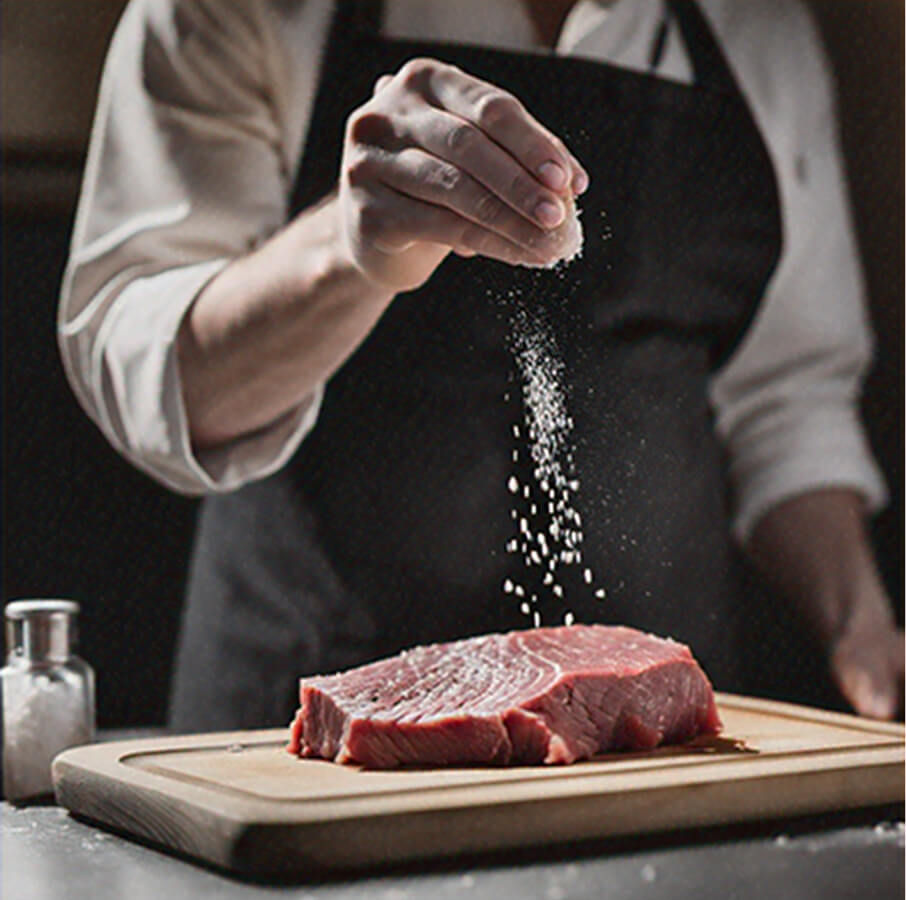
Season the good fresh beef fillets with salt and black pepper. Heat olive oil in a pan over high heat and sear the fillets for 2 minutes per side until it fully browned. Remove the beef from the pan and brush with a thin layer of mustard. Let it cool.
1
Season the good fresh beef fillets with salt and black pepper. Heat olive oil in a pan over high heat and sear the fillets for 2 minutes per side until it fully browned. Remove the beef from the pan and brush with a thin layer of mustard. Let it cool.
1
Season the good fresh beef fillets with salt and black pepper. Heat olive oil in a pan over high heat and sear the fillets for 2 minutes per side until it fully browned. Remove the beef from the pan and brush with a thin layer of mustard. Let it cool.
1
Season the good fresh beef fillets with salt and black pepper. Heat olive oil in a pan over high heat and sear the fillets for 2 minutes per side until it fully browned. Remove the beef from the pan and brush with a thin layer of mustard. Let it cool.
Instructions
Quality Fresh 2 beef fillets ( approximately 14 ounces each )
Quality Fresh 2 beef fillets ( approximately 14 ounces each )
Quality Fresh 2 beef fillets ( approximately 14 ounces each )
Beef Wellington
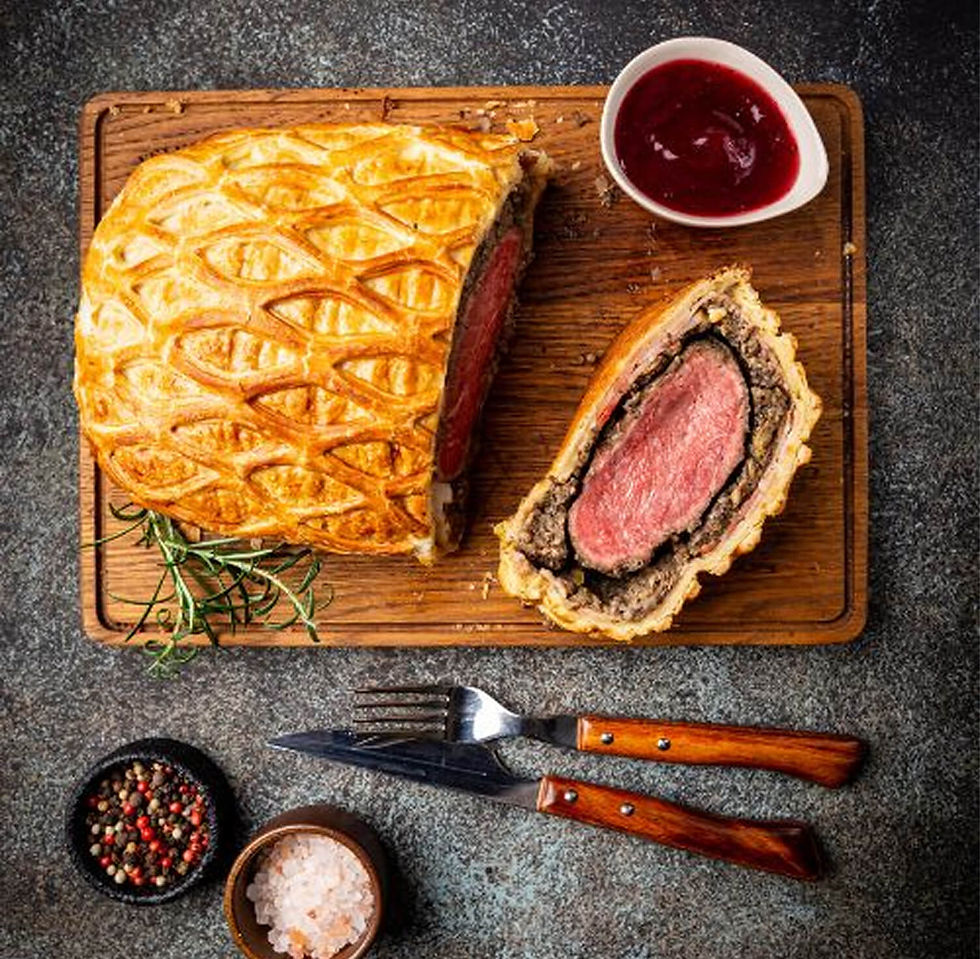
Beef Wellington
Fusion Wizard - Rooftop Eatery in Tokyo
Author Name
%20(1).jpg)
Beef Wellington is a luxurious dish featuring tender beef fillet coated with a flavorful mushroom duxelles and wrapped in a golden, flaky puff pastry. Perfect for special occasions, this recipe combines rich flavors and impressive presentation, making it the ultimate centerpiece for any celebration.
Servings :
4 Servings
Calories:
813 calories / Serve
Prep Time
30 mins
Prep Time
30 mins
Prep Time
30 mins
Prep Time
30 mins


Comments