Entitlement, Roles, Titles, and Narcissism Recovery
Updated: Jun 26

If you have a person with narcissistic traits in your life, you’ve dealt with entitlement. That said, it can be challenging to identify! Infants are born self-centered, with an innate drive to want what they want, when they want it, because they want it, and even as healthy adults, we still have this drive.
In adulthood, wanting what you want, when you want, because you want it, isn’t a bad thing in and of itself. It forms the foundation of healthy narcissism. In healthy narcissism, you care enough about yourself to get what you need, and to get what you enjoy and what brings your life meaning. Healthy narcissism pushes us to seek out self-care and self-nurturing.
In an ideal world, infants have parents who are able to guide their children from self-centeredness to healthy narcissism. Unfortunately, not everyone has parents who are skilled enough to do so. Some adults never outgrow the infantile desire to get what they want, when they want, because they want it. In fact, they expect to get what they want, when they want, because they want it!
That thinking forms the foundation of entitlement, which influences how people with narcissistic traits see roles and titles. Today we’ll explore how entitlement, roles, titles, and narcissism recovery work together, so you can navigate your relationship with your person with narcissistic traits. Let’s jump right in!
Entitlement in general
Entitlement is one of the six tenets of narcissism, so if you have a person with narcissistic traits in your life, you’ll encounter it often. People with narcissistic traits do what they want, when they want, because it’s what they want to do. If they feel like being empathetic, they will. If they don’t feel like being empathetic, they won’t. And they think nothing of this behavior, because they believe they’re entitled to what they want, when they want, because they want it.
You’ll often see entitlement behavior framed as a “should” statement, like “I shouldn’t have to…” There’s an extraordinary amount of behavior in American culture that falls into this category. When was the last time you saw someone engage in one of these behaviors?
Littering
Deliberately cutting in line at a store
Driving as far as you can in traffic to merge, even when you can easily merge in sooner
Talking on their phone in a movie theater during the movie
All of these behaviors have entitlement at their core. I’ve asked people why they litter, and I’ve heard variations on a theme of “I shouldn’t have to carry this empty cup around until I find a trash can. Someone who works for the city will pick it up anyway.”
Years ago, I had my color season analyzed to determine which colors look best on me. An acquaintance told me she would never have her color season analyzed “because no one is going to tell me what colors I can and can’t wear!”
Her need to do what she wanted, when she wanted, was so intense she saw knowing her color season as a threat—even though, of course, you can wear whatever colors you want when you know what color season you are. She completely missed the entire point of knowing her color season, which was to know what colors looked best on her!
So why does entitlement happen? Recent fMRI research indicates people with narcissistic traits have limited activity in the part of the brain that manages empathy. That suggests people with narcissistic traits start out self-centered as infants, and never learn how to balance their feelings with how others might be feeling. They have the body and intellect of an adult, but the emotional life of a child.
Entitlement in the parent-child relationship
So, that’s entitlement in general. One particular way you’ll see entitlement acted out is in parenting. Narcissistic parents focus on the title of parent. They want all the rights and privileges that come with parenting. After all, they’re your parent, so they’re entitled to those things!
An unhealthy need for power and control is another one of the six tenets of narcissism, so it’s no surprise narcissistic parents put power and control together with entitlement, then believe they have the right to tell children (including their adult children) what to do. Narcissistic parents expect that they should be able to tell you what to do—only once—and you’ll do it immediately, without question. They expect to take credit for your accomplishments, and they expect you to take the blame for your mistakes and failures.
Telling you what to do can range from telling you how to dress and look, to what career to choose, to forbidding you to date someone they dislike. On the far end of the narcissistic spectrum, they not only make decisions for you, but expect you to be grateful they are doing so. They’re unconcerned about how it is for you to feel powerless in your own life, and they don’t care if the outcome of their decisions affects you negatively. They’re the parent, so they’re entitled to run your life!
What parents with narcissistic traits find difficult (or impossible) to do is following through on the role of parent. They don’t want the responsibilities of being a parent. They want to do what they want to do, when they want to do it, because it’s what they want to do! Identifying and meeting someone else’s needs isn’t on their agenda.
If you have a parent with narcissistic traits, their inability to follow through on the role of parent may affect you in adulthood. You may find it challenging to be a caring parent to yourself. This can evince in finding it hard to engage in self-care or self-nurturing, to being assertive in your relationships with others, or in difficulties with parenting your own children.
You were probably parentified, too. Because the narcissistic parent is focused only on the title of parent, not the role of parent, they're unconcerned with their child's needs. This leaves children of parents with narcissistic traits stepping into the role of parents, and parenting themselves.
Entitlement in partner relationships
If you’ve been in a partner relationship with a person with narcissistic traits, you’ll experience plenty of entitlement in which they expect to do what they want, when they want, because they want. Common examples include King/Queen Baby behaviors like spending money in a joint account without discussing it first, agreeing to do something and then doing the opposite, or agreeing to do something, then “forgetting” to do it.
People with narcissistic traits also expect you do to what they want, when they want, simply because they want it. This can show up in any type of relationship, but it’s a serious problem in partnerships. Your partner may tell you they “just don’t notice” the trash piling up, or “forgot” to put their dirty dishes in the dishwasher.
You can easily tell the difference between entitlement and actual forgetting or not noticing. If you bring something to your partner’s attention and they acknowledge their part in it and make it right, it’s more likely they actually forgot or didn’t notice.
In contrast, if they offer excuses, argue, try to justify or rationalize their behavior, ignore you, or accuse you of nagging, it’s probably entitlement. As the saying goes, When you’re right, you don’t need to be defensive.
Patriarchal beliefs about child care and housework being “women’s work” is often entangled with entitlement. If your partner believes wedding planning or changing diapers is for women, you’re probably looking at entitled behavior.
However, entitlement doesn’t have to have an obvious source. If your partner expects you to keep track of the household, run errands for them, buy and wrap gifts for their family members, etc., entitlement thinking is probably at the foundation of your partner’s beliefs, whether they believe those tasks are "women's work" or not.
Finally, as with the parent-child relationship, you may see entitlement show up as a focus on the title, not the role, particularly in marriage. If you’re married to someone with narcissistic traits, they may wear their wedding ring faithfully, refer to you as their beloved spouse, make a big deal about anniversaries, and brag about your honeymoon or most recent wedding anniversary celebration. They’re happy to claim the title of husband or wife! But when it comes to fulfilling the role of husband or wife, they skip out.
You, however, are expected to fulfil the role of husband or wife—which really means the role of parent. You’re responsible for the tasks and chores of adulthood that they don’t want to do, so they can focus only on the aspects of adulthood they choose.
As with the parent-child relationship, this can be incredibly confusing. Your partner seems to value your relationship—but they don’t seem to value you. Seen through the lens of entitlement, it makes sense: There’s benefit to your partner in being in relationship. The title of spouse is useful to them. But following through on the work of a relationship? Not so much. And because they believe they should get what they want, when they want, because they want it, you end up with the short end of the stick.
Dealing with entitlement behaviors
So, what can you do if you’re in a relationship with someone with narcissistic traits? Here's how to handle it when you see entitlement behaviors:
Recognize it for what it is.
You’re engaging with a person who is, in that moment, in their feeling brain. Depending on the person with whom you’re engaging, their feeling brain might be equivalent to a four-year-old’s, or a twelve-year-old’s. One thing is certain: They’re not an emotional adult.
Stay in your thinking brain.
Identifying that entitlement behavior is happening will help you shift from your feelings (“It’s not fair!”) to your thoughts (“Hm, entitlement! It’s happening to me personally, not because of me personally”). Once you’re solidly in your thinking brain, it’s much easier to…
Act from your circle of control.
Perhaps the single most important thing you can remember when you’re dealing with entitled behavior is that your circle of control includes how you think, how you feel, and what you do. You cannot control what others think, feel, or do.
And when you’re dealing with an adult who is an emotional child who wants what they want, when they want it, because they want it, you’re probably not going to be able to influence them to think differently.
So, it makes more sense to stay squarely in your circle of control. The question shifts from What makes them think they can behave like that?! to What do I think I should do in this situation?
Naturally, the answer to that question will vary considerably, depending on the situation itself. But focusing on what's in your circle of control will help you stay in your thinking brain, so you can do what you think is best.
That said, it can be challenging to follow through on what you think you should do. If you have a parent or sibling with narcissistic traits, entitlement behavior may trigger memories, consciously or subconsciously, of their entitled behavior. The same is true if you’re in (or were in) a relationship with a friend or partner with narcissistic traits. Those memories can make it difficult to stay in your thinking brain, and stay in your circle of control.
If the idea of staying in your thinking brain and your circle of control when you encounter entitlement feels overwhelming, I encourage you to consider working with a therapist who specializes in narcissism recovery. You deserve to thrive!
Like what you're reading?
Click here for a free weekly email every Friday,
scroll down to leave a comment or a rating,
or click on the three dots at the top of the page to share with a friend!
(If you're not getting your email, check your Promotions, Updates, Junk, Spam, etc. folders!)
If you click on the links in this post and make a purchase, I earn a small finder's fee on qualifying purchases as an Amazon Associate, at no cost to you.
This website is for educational purposes only. It is not intended to be a substitute
for or to replace working with a doctor, therapist, or any other care provider.
I assume no responsibility for errors, inaccuracies, omissions, or other
inconsistencies, and disclaim any liability to any party for any events,
including but not limited to loss, damage, or disruption, whether loss,
damage, or disruptions results from negligence, accident, or any other cause.
Your use of the information on this website is at your own risk.
1
Searing the Beef
Sear beef fillets on high heat for 2 minutes per side to form a golden crust. Let it cool before proceeding to keep the beef tender.
1
Searing the Beef
Sear beef fillets on high heat for 2 minutes per side to form a golden crust. Let it cool before proceeding to keep the beef tender.
1
Searing the Beef
Sear beef fillets on high heat for 2 minutes per side to form a golden crust. Let it cool before proceeding to keep the beef tender.
1
Searing the Beef
Sear beef fillets on high heat for 2 minutes per side to form a golden crust. Let it cool before proceeding to keep the beef tender.
Notes



1
Season the good fresh beef fillets with salt and black pepper. Heat olive oil in a pan over high heat and sear the fillets for 2 minutes per side until it fully browned. Remove the beef from the pan and brush with a thin layer of mustard. Let it cool.
1
Season the good fresh beef fillets with salt and black pepper. Heat olive oil in a pan over high heat and sear the fillets for 2 minutes per side until it fully browned. Remove the beef from the pan and brush with a thin layer of mustard. Let it cool.
1
Season the good fresh beef fillets with salt and black pepper. Heat olive oil in a pan over high heat and sear the fillets for 2 minutes per side until it fully browned. Remove the beef from the pan and brush with a thin layer of mustard. Let it cool.
1
Season the good fresh beef fillets with salt and black pepper. Heat olive oil in a pan over high heat and sear the fillets for 2 minutes per side until it fully browned. Remove the beef from the pan and brush with a thin layer of mustard. Let it cool.
Instructions
Quality Fresh 2 beef fillets ( approximately 14 ounces each )
Quality Fresh 2 beef fillets ( approximately 14 ounces each )
Quality Fresh 2 beef fillets ( approximately 14 ounces each )
Beef Wellington
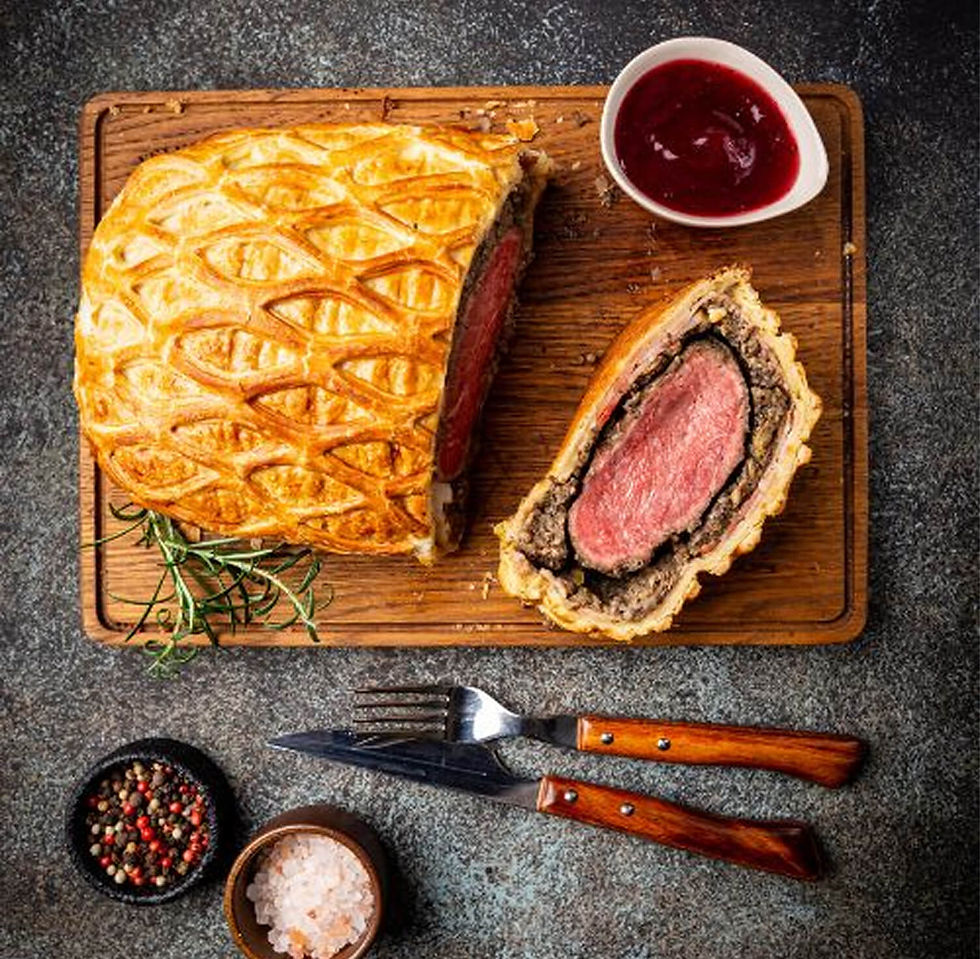
Beef Wellington
Fusion Wizard - Rooftop Eatery in Tokyo
Author Name
%20(1).jpg)
Beef Wellington is a luxurious dish featuring tender beef fillet coated with a flavorful mushroom duxelles and wrapped in a golden, flaky puff pastry. Perfect for special occasions, this recipe combines rich flavors and impressive presentation, making it the ultimate centerpiece for any celebration.
Servings :
4 Servings
Calories:
813 calories / Serve
Prep Time
30 mins
Prep Time
30 mins
Prep Time
30 mins
Prep Time
30 mins


Comments